











Deputy Prime Minister and Minister of Natural Resources and Environment Suchat Chomklin has ordered intensified measures to tackle escalating forest fires and rising PM2.5 pollution in northern Thailand. The minister expressed concern over air quality and health impacts and instructed the ministry to step up daily monitoring and immediate response across 17 provinces in the region.
Suchat assigned Dr Rawiwan Phuridej, Permanent Secretary of the Ministry of Natural Resources and Environment, to instruct provincial offices to monitor fire events closely. The directive covers reserved forests, protected areas, agricultural land and other vulnerable locations. Authorities must report daily situational updates to provincial governors and recommend timely local measures to prevent fires spreading and worsening air pollution.
Thailand PM2.5 response
The ministry emphasised that monitoring of PM2.5 concentrations must be continuous so that provincial leaders can act swiftly. Information on air quality and hotspot detections will inform public health advisories and local emergency measures. Officials are expected to use these data to assess the need for restrictions on open burning and other activities that contribute to hazardous fine particulate levels.

To strengthen field capacity, provincial offices of the Ministry of Natural Resources and Environment will work closely with forest operation centres to integrate personnel, equipment and resources. The aim is to ensure an immediate and coordinated response whenever fires occur. Provincial teams will also liaise with district offices, local administrative organisations and village heads to monitor and control agricultural burning that takes place within or near legally protected forest boundaries.
Officials will focus on preventing the expansion of controlled burns beyond permitted areas. The ministry warned that uncontrolled agricultural burning can produce hotspots that escalate into large forest fires and severe smoke episodes. Local authorities have been urged to intensify patrols, enforce regulations and engage communities to reduce risk.
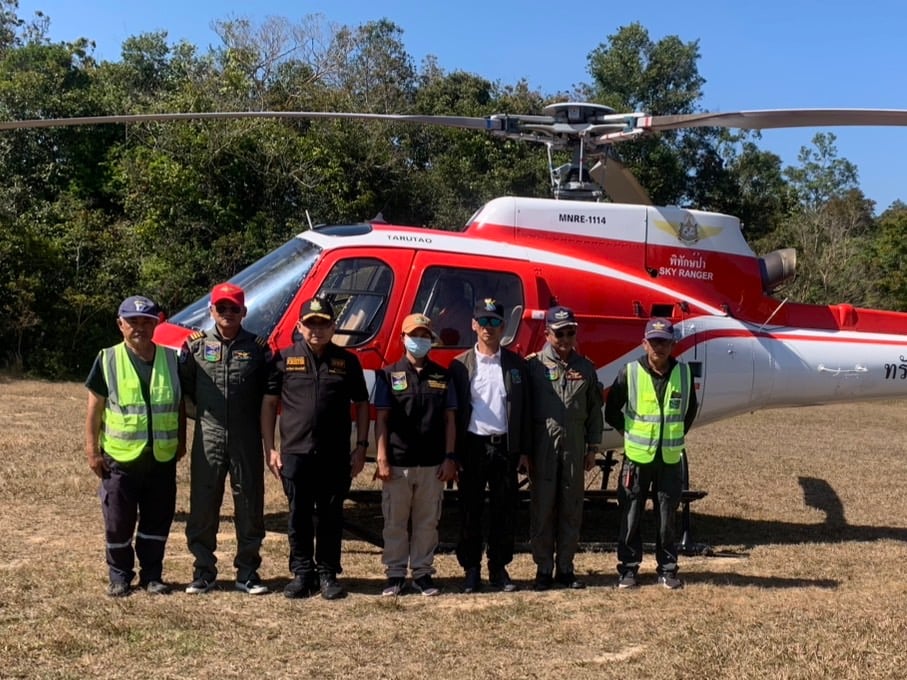
The Air and Geoinformatics Technology Centre at the Office of the Permanent Secretary will support operational planning and rapid deployment. The centre will track hotspot locations and share real time data with forest operation centres and provincial teams. These data will also be used to prepare and, when necessary, deploy aircraft and helicopters for firefighting support.
Suchat stressed that the ministry regards prevention and mitigation of forest fires and PM2.5 pollution as a top priority. He called on all relevant agencies to coordinate closely and sustain intensive efforts to protect public health and the country’s natural resources. The ministry will continue to provide updates to the public and work with provincial administrations to ensure appropriate actions are taken to reduce exposure and limit environmental damage.
Public health authorities have advised residents in affected areas to follow air quality guidance, limit outdoor activity during high PM2.5 episodes and use protective masks where recommended. The ministry’s combined strategy of surveillance, local enforcement and aerial support aims to reduce the frequency and severity of smoke events and to build longer term resilience against seasonal fires.
Key Takeaways:
- Thailand PM2.5 response: Government orders daily monitoring of forest fires and fine dust across 17 northern provinces.
- Provincial MONRE offices will coordinate with forest operation centres, local authorities and community leaders to curb agricultural burning.
- The Air and Geoinformatics Technology Centre will track hotspots and support helicopter readiness for rapid response.








