











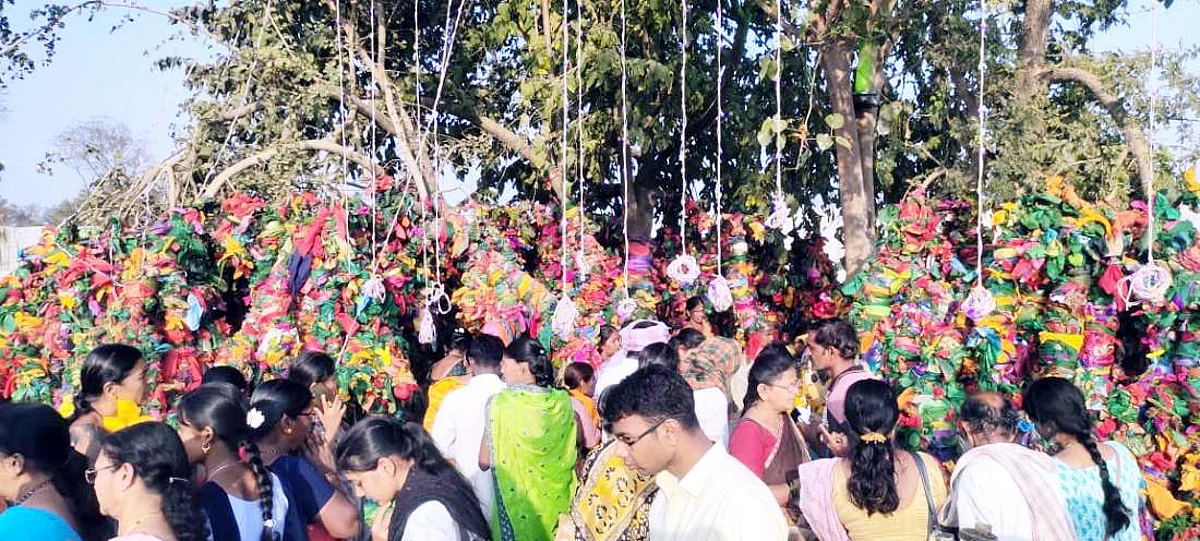
Marakumbi village in Bailhongal taluk is preparing to welcome thousands of devotees for the annual Chamundeshwari jatra, with organisers estimating between 10,000 and 15,000 visitors over the four‑day festival from 4 to 7 January. Pilgrims have already begun arriving by bus, car and motorcycle from Bailhongal, Yaragatti, Savadatti and Belagavi, turning the temple precincts into a steady stream of worshippers.
Local authorities and temple volunteers say food and basic services have been organised on a large scale. “For the last five months we have been running continuous kitchen shifts to provide meals and refreshments 24 hours a day for devotees,” said Mahantesh Koujalagi, a local trustee. Temporary shelters, public transport coordination and medical aid points have been put in place to manage the influx.
Chamundeshwari festival India draws pilgrims from across the region
Social media attention has played a significant role in boosting visitor numbers. Posts and videos highlighting the power and significance of the deity have circulated widely, prompting more people to make the pilgrimage. “The praise for the deity on social platforms has increased awareness, and we are seeing people from many neighbourhoods arriving for darshan,” said G. B. Mallesh, a religious guide associated with the temple.

The shrine houses a revered Sri Chakra together with the Chamundeshwari idol and a Sri Lakshmi salagrama that devotees regard as particularly special. Temple authorities describe the salagrama as unique in South Asia and credit it with safeguarding the shrine from negative influences.
Festival highlights have been scheduled to accommodate both ritual and cultural activities. On 5 January, pallakki (palanquin) processions will culminate with the arrival of deities from as many as 50 surrounding villages. The following day will feature a Chandika homa — a fire ritual — and a series of collective marriage ceremonies for local couples. The grand ambari procession, accompanied by traditional music and lamps, will be held on 7 January, starting from the Channamma samadhi in Bailhongal and proceeding to the temple.
Organisers say the religious observances are matched by sizeable community engagement. Devotees perform traditional offerings such as rice, jaggery, salt, lamps and oil. “People come with faith and special requests; the offerings reflect a variety of vows and thanks,” explained youth leader Rahul Koujalagi, who is assisting with logistics.
Plans for a major statue project have also attracted attention. Temple representatives described a proposed idol standing 179 feet tall with a modest pedestal, a project expected to be completed by 2030. The initiative aims to create a landmark that will draw visitors year round and support local pilgrimage‑based tourism.
Local businesses and service providers are preparing for increased demand across the town. Hotels, tea stalls and transport operators along bus routes report higher bookings and steady footfall already. Organisers emphasise that safety measures, crowd control and sanitation will be prioritised throughout the festival.
As Marakumbi readies for the celebrations, officials say the jatra is not only a religious gathering but also a boost to the local economy and social cohesion. The combination of traditional ritual, community charity and an organised approach to hospitality appears to have created a festival that draws both devotion and wider public interest.
Key Takeaways:
- Chamundeshwari festival India draws an expected 10,000–15,000 devotees to Marakumbi between 4–7 January.
- Organisers have arranged round‑the‑clock meals and logistics as pilgrims arrive from nearby towns and 50 villages.
- Major events include a procession of deities on 5 January, mass homa and collective weddings on 6 January, and a grand ambari procession on 7 January.
- Social media publicity and a planned 179‑foot idol project have increased visitor interest and local preparations.








