











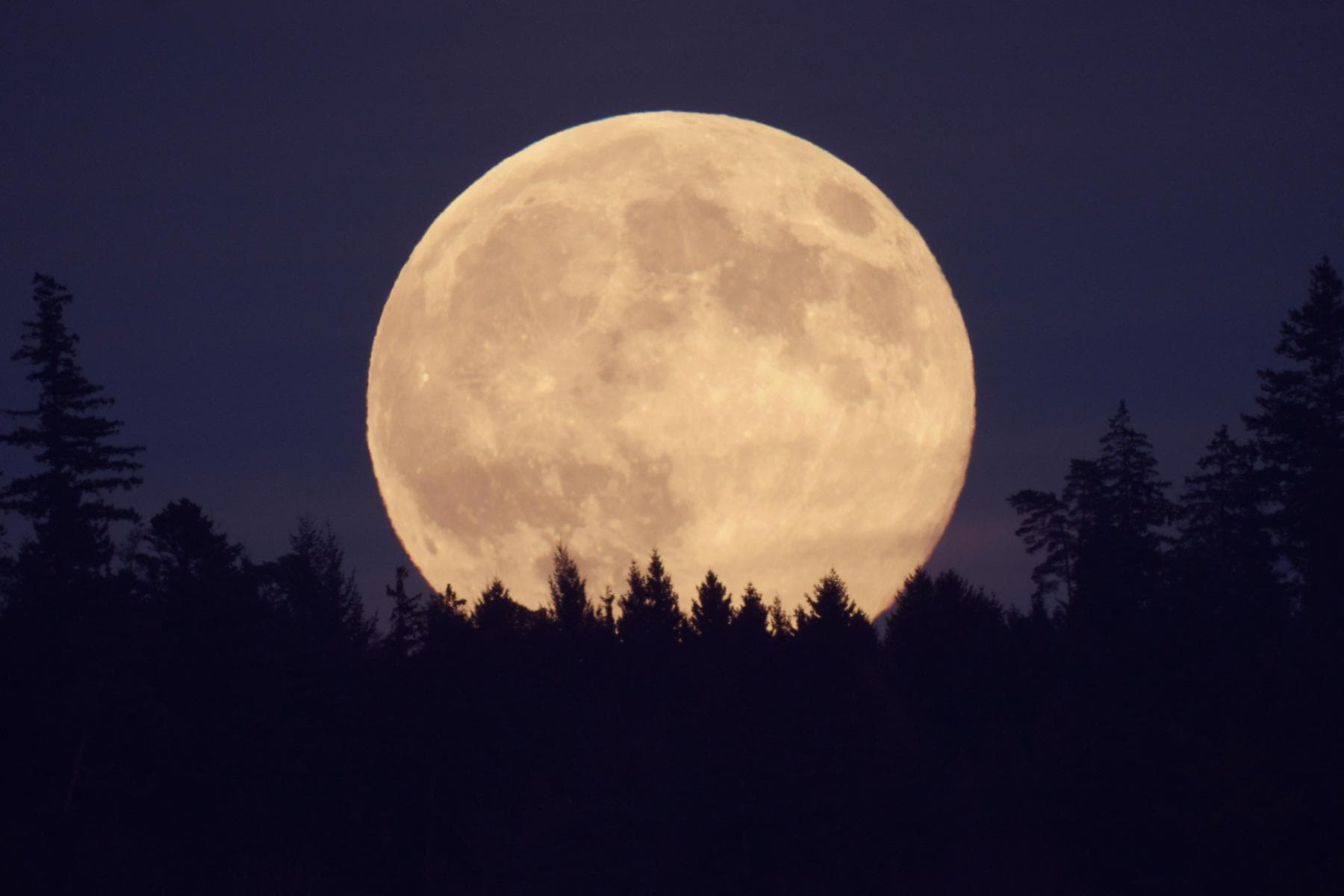
Three Supermoons are set to appear in 2026, offering skywatchers in Brazil and beyond a chance to see the Moon at its nearest point to Earth during full phase. While the effect is generally subtle to the unaided eye, the combination of timing and horizon conditions can create striking views.
Supermoon 2026 – what defines the phenomenon
A “Supermoon” occurs when a full Moon coincides with perigee, the point in the lunar orbit when the Moon is closest to Earth. Because the Moon’s orbit is elliptical, its distance from our planet varies by roughly 50,000 kilometres between apogee and perigee. At perigee the lunar disc can appear noticeably larger and brighter than at other times.
Scientists and amateur astronomers caution that the term “Supermoon” is not a precise scientific designation; it originated outside mainstream astronomy and is used primarily to communicate an observable change to the public. Marcelo Zurita, president of the Paraíba Astronomy Association and a member of the Brazilian Astronomical Society, notes that while the label helps popularise observations, the visual difference is modest and depends on viewing conditions.

Dates to mark in your calendar
For 2026, the calendar lists three Supermoon events:
- 3 January — the first Supermoon of the year, when the full Moon will reach perigee.
- 25 November — the second Supermoon, often referred to regionally as the Beaver Moon or Luna do Castor.
- 24 December — the most pronounced Supermoon of 2026, occurring on Christmas Eve and expected to be the closest approach of the year.
The December event is likely to produce the most noticeable visual effect, though weather and local horizon features are decisive factors in how dramatic the Moon appears.
How to get the best view
Observers should aim to watch the Moon when it is low on the horizon at moonrise or moonset. In that position, atmospheric effects and foreground features such as trees or buildings can amplify the apparent size of the lunar disc. Using a camera with a telephoto lens or binoculars will reveal more detail, but bear in mind that the unaided eye may struggle to detect the full extent of the size and brightness changes.
Professional interest in Supermoons is limited, since the phenomenon does not entail unusual physical processes; nevertheless, the events provide excellent opportunities for public outreach and education. Planetariums, astronomy clubs and science communicators across Brazil often organise observations and explain the orbital mechanics behind what casual viewers see in the sky.
Whether you are a seasoned amateur astronomer or simply curious, Supermoon 2026 offers predictable dates to plan an evening of skywatching. Keep an eye on local forecasts and event listings from astronomy associations for group viewings and expert commentary.
Key Takeaways:
- Brazil will see three Supermoons in 2026 on 3 January, 25 November and 24 December — Supermoon 2026 provides clear dates for observers.
- The visual effect is subtle: the Moon can appear up to 14% larger and around 30% brighter when at perigee.
- Best viewing occurs when the Moon is low on the horizon at moonrise or moonset.








