











Key Takeaways:
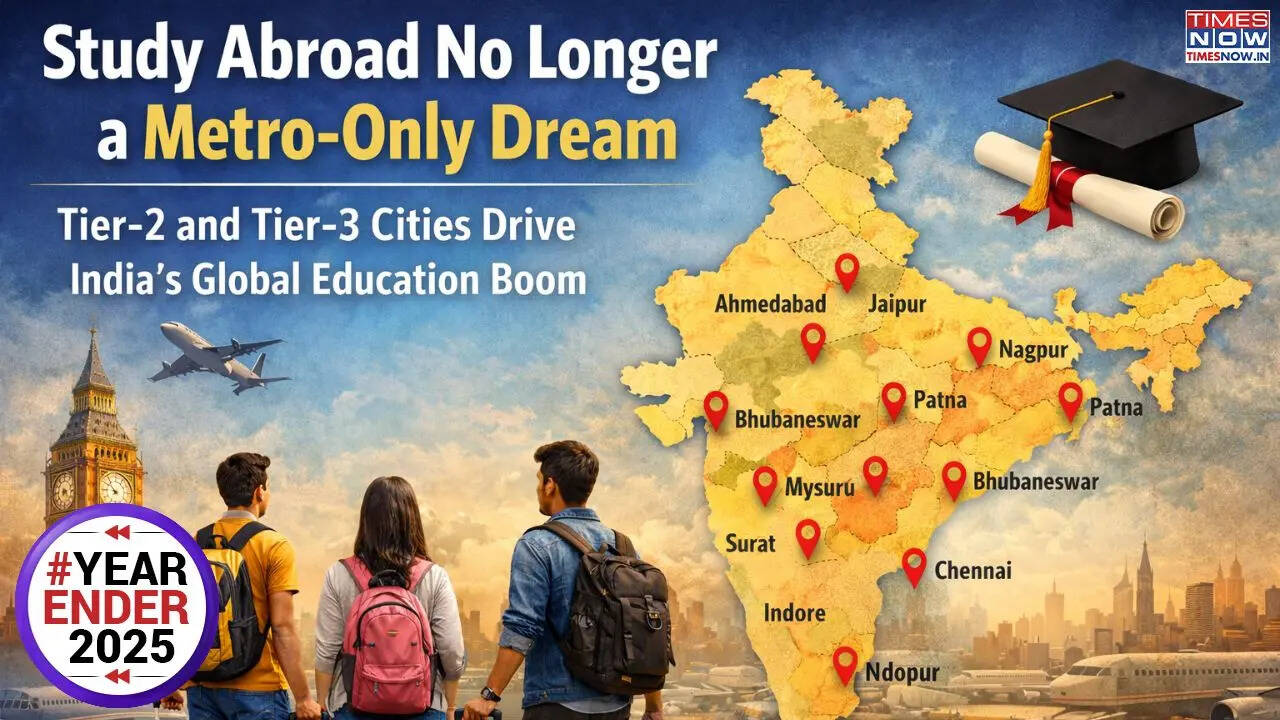
- Study abroad from Tier‑2 and Tier‑3 India now accounts for roughly 57% of outbound aspirants, reflecting wider access to information, loans and scholarships.
- Non-metro cities such as Indore, Patna, Nagpur and Vijayawada are emerging as fast-growing education hubs with strong career clarity.
- Online resources and local awareness have reduced costs and barriers, enabling middle‑income families to consider global degrees.
- Experts say this demographic shift will define the next decade of outbound student growth and deliver long‑term economic returns.

Studying abroad is no longer a privilege confined to India’s largest metropolitan centres. A marked rise in interest from smaller cities is reshaping the country’s outbound student profile, with growing numbers from Tier‑2 and Tier‑3 towns seeking higher education overseas.
Study abroad from Tier‑2 and Tier‑3 India
Recent surveys and industry reports show that around 57 per cent of Indian students who aspire to study overseas now come from non‑metro areas, up sharply from previous years. OneStep Global’s Transnational Education report put the figure at 57.2 per cent, a notable jump from 47 per cent the year before. Cities such as Indore, Patna, Nagpur and Vijayawada are identified as fast‑growing education hubs, with students from these regions demonstrating both clear intent and strong career focus.
Experts point to three main drivers behind the shift: improved access to reliable information, wider availability of education loans and scholarships, and rising household incomes. “Recent student‑mobility surveys show that about 57 per cent of Indian overseas‑education aspirants now come from non‑metro cities, up sharply from a few years ago,” said Saurabh Arora, Founder and CEO of University Living. “This reflects expanding access to information, wider loan availability, and a growing belief among middle‑income households that global education is within reach.”
Students report that online resources have played a decisive role. A marketing student from Dehradun, now studying in the UK, recalled discovering scholarship routes and application processes while still in Class 9. She credits a combination of peer networks and digital research for turning a distant aspiration into a concrete plan, without the need to consult costly local experts in metro centres.
Industry leaders concur that the pattern is durable. “This shift is driven by rising family incomes, improved access to information, and strong aspirational momentum in Tier‑2 and Tier‑3 markets,” said Siddharth Iyer, COO of OneStep Global. Sagar Bahadur, Executive Director for Asia at Acumen, added: “The study‑abroad dream is no longer the preserve of the urban elite; smaller cities are producing globally ambitious students who are actively seeking high‑quality, value‑driven education overseas. This demographic will define the next decade of outbound student growth.”
Beyond aspiration, students are pragmatic about return on investment. Many choose programmes with clear career outcomes or temporary work routes to repay education loans and build savings. A 28‑year‑old from Durg described pursuing a US postgraduate degree in project management, working in the States for a period to repay loans before returning to India to start a more comfortable life for his family.
The broadening geographic base for outbound students has implications for universities, recruiters and policymakers. Educational institutions overseas may need to adjust outreach strategies and scholarship offers to connect with non‑metro populations. Domestic stakeholders can support the trend by expanding local counselling, simplifying loan processes and strengthening scholarship awareness in smaller cities.
For many families, improved digital access and clearer financing options have turned the idea of studying abroad from an elite dream into an achievable plan. As non‑metro students increasingly pursue international degrees, the economic and social returns could be significant, both for individual households and for the wider economy.








