Key Takeaways:
- Tokayev condemns drone attack on Russian presidential residence and expressed solidarity with Moscow.
- Leaders discussed implementation of agreements reached during Tokayev’s November 2025 state visit to Moscow.
- Uzbek President Mirziyoyev issued a similar condemnation, highlighting regional diplomatic alignment.
- Calls for upholding security and continued bilateral cooperation were emphasised during the phone calls.

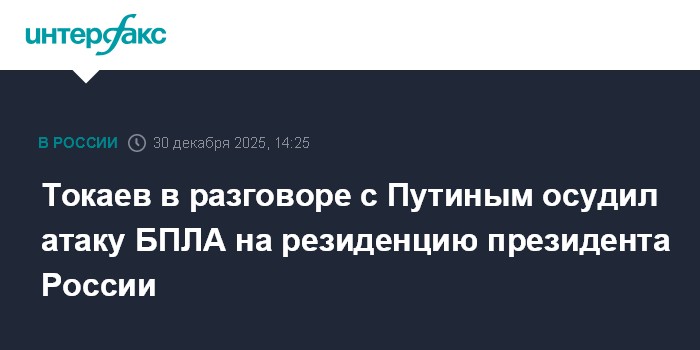
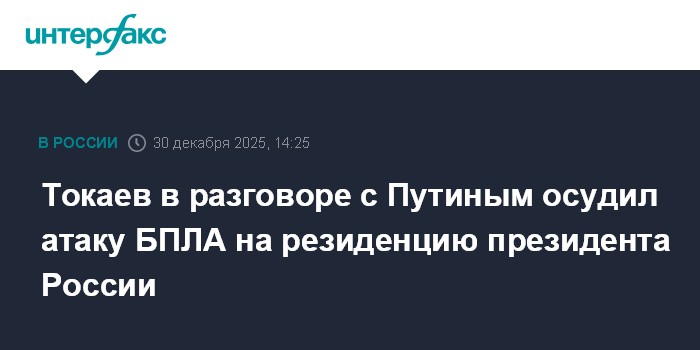
Moscow, 30 December (Interfax) — Kazakhstan President Kassym-Jomart Tokayev has strongly condemned a drone attack on the Russian presidential residence in the Novgorod region, according to a statement released by the Kremlin press service.
During a telephone conversation with Russian President Vladimir Putin, Mr Tokayev described the incident as a provocative act and voiced his firm disapproval. The two leaders exchanged warm New Year greetings and reviewed several items on the bilateral agenda, including progress on the implementation of agreements reached following President Tokayev’s state visit to Moscow in November 2025.
Tokayev condemns drone attack and stresses diplomatic cooperation
The call underlined close channels of communication between Kazakhstan and Russia at a sensitive moment. Moscow’s press service said the leaders discussed the security situation and reaffirmed their commitment to follow through on shared projects and commitments agreed earlier this year.
In a separate telephone conversation on Tuesday, President Shavkat Mirziyoyev of Uzbekistan also conveyed strong condemnation of the attack. The Uzbek leader described the drone strike as an irresponsible terrorist action by Kyiv and joined in expressing solidarity with Russia. Both calls included cordial greetings for the approaching New Year and reflected satisfaction with recent advances in strategic partnership and alliance ties.
The incidents have prompted immediate diplomatic responses from neighbouring states. Kazakhstan and Uzbekistan’s public statements align them with Moscow’s position and demonstrate regional convergence on the need to condemn attacks on states’ official facilities.
Analysts say such responses serve several purposes: to express solidarity with an ally, to calm domestic and regional audiences, and to reinforce bilateral cooperation at a time when security concerns are prominent. For Kazakhstan, which has pursued a balanced foreign policy, this reaffirmation of partnership with Russia follows the high-profile state visit in November 2025 and signals a continuing focus on practical cooperation.
While the immediate priority for leaders has been to condemn the attack and to exchange assurances, the conversations also provided an opportunity to review longer-term projects. The Kremlin’s statement noted that the leaders touched on the implementation of agreements from the November visit, suggesting that economic and strategic initiatives remain on the agenda despite heightened security tensions.
Regional capitals have shown an increased tendency to coordinate diplomatic messages in response to incidents that could affect stability. Uzbekistan’s reaction echoed Kazakhstan’s position, highlighting shared concerns among Central Asian states about preserving security and avoiding escalation.
Officials have not disclosed operational details or new measures resulting directly from the calls. Observers will be watching for any follow-up meetings or initiatives intended to strengthen cooperation on security, intelligence sharing, or crisis communications.
As the year ends, leaders across the region continue to balance public condemnation of hostile acts with efforts to maintain avenues for dialogue and cooperation. The recent exchanges between Kazakhstan, Russia and Uzbekistan illustrate how diplomatic channels are being used to manage tensions while keeping broader bilateral agendas on course.