











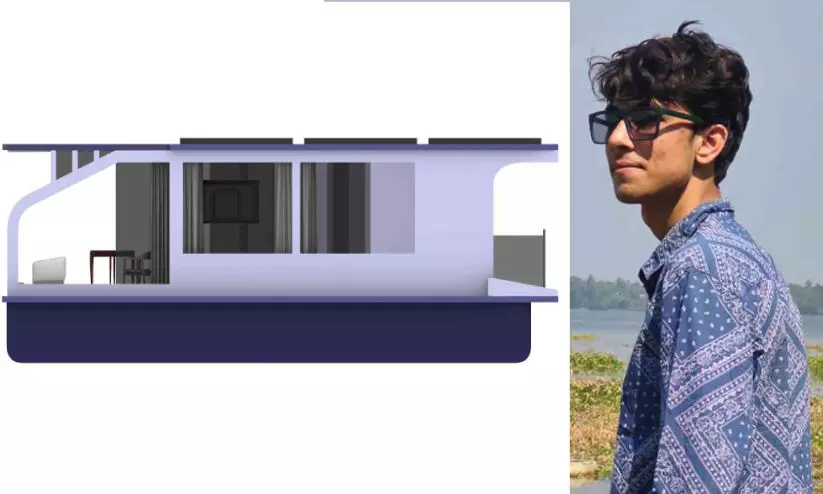
A new proposal for floating cottages around Kerala’s backwater islands is gaining traction as an innovative way to expand tourism while respecting coastal protection rules. Designer Naman Sharma, originally from Jammu and now based in Mumbai, has presented a modular, environmentally conscious concept intended for the state’s kayal islands and lagoons.
Sharma developed the idea after completing technical studies in Ahmedabad and serving a marine design internship under Prof. Unnimenon. He worked at the Arur shipyard, where the floating cottages were conceived to meet regulatory requirements and practical needs of backwater tourism.
floating cottages Kerala
The central advantage of the floating cottages is regulatory. Kerala’s coastal protection laws pose significant limits for conventional construction along backwater shores. Sharma’s design is structured so the cottages would fall under the jurisdiction of the Kerala Maritime Board, reducing the need for coastal construction clearances that typically restrict shoreline development.

According to Sharma and the Arur shipyard, the cottages will comply with all maritime board conditions and safety standards. They are modular and available in multiple sizes to serve single families as well as larger groups. The units are designed to be fully waste‑free, with systems to manage sewage and waste on board, aiming to protect the fragile lagoon ecosystems.
Proponents say the floating cottages can transform small islands into viable tourist hubs. The concept includes facilities to host cultural and festival events on the islands, alongside accommodation in the cottages. This dual use would create new local income streams while avoiding permanent, land‑based construction that can harm mangroves and shoreline habitats.
Kumbalangi panchayat, known for its successful backwater tourism initiatives, has expressed readiness to pilot the floating cottages as part of its tourism programme. Local officials have welcomed the idea, noting that a pilot would help test operational details, environmental safeguards and visitor management before any wider rollout.
The Arur shipyard has indicated it can build the units in accordance with maritime board regulations and has committed to working with local authorities to ensure the designs meet safety and environmental criteria. Sharma emphasises that all cottages will be built to the prescribed standards and that the project seeks to operate in full regulatory compliance.
Tourism stakeholders see potential benefits beyond accommodation. Floating cottages could extend the season for lake and backwater tourism, attract new visitors, and support small businesses on the islands. If successful, the model may be replicated across Kerala’s lagoons and backwater islands, presenting a low‑impact alternative to conventional shoreline development.
Environmental groups will remain key stakeholders in any pilot. Their scrutiny will focus on waste management, anchoring systems and cumulative impacts on water quality. Sharma’s team stresses that the cottages are conceived to be modular and removable, offering a reversible tourism infrastructure that can adapt to environmental monitoring results.
As the pilot proposal moves forward, the focus will be on careful implementation, regulatory approvals from the Kerala Maritime Board, and close coordination with local communities. The concept positions floating cottages as a practical, sustainable supplement to Kerala’s established backwater tourism, aiming to balance visitor demand with coastal conservation.
Key Takeaways:
- Designer Naman Sharma has proposed eco‑friendly floating cottages to expand backwater tourism in Kerala.
- The concept aims to bypass coastal construction limits by seeking Kerala Maritime Board approvals rather than standard coastal regulation clearances.
- Pilot trials are planned in Kumbalangi panchayat with Arur Shipyard supporting design and construction.
- Modular, waste‑free cottages will accommodate families and host island events, supporting local tourism development.








