











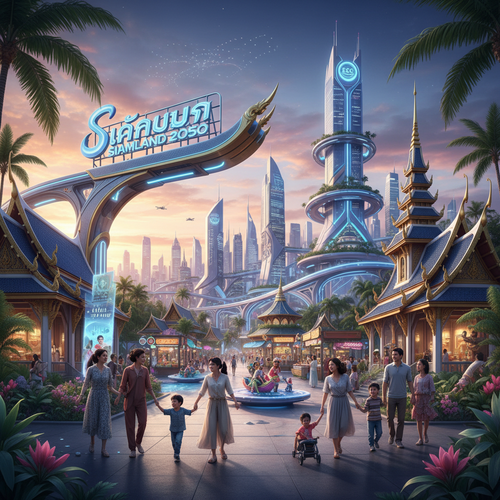
Thailand is exploring a major leap in its tourism strategy with plans for an international Disneyland, a project that promises to expand family-oriented offerings and attract visitors from across the globe. The proposal is undergoing a feasibility study led by the Eastern Economic Corridor Office, at the request of Deputy Prime Minister and Minister of Transport Phiphat Ratchakitprakarn.
Disneyland Thailand to Target Family Visitors
Officials say the initiative marks a deliberate shift from the country’s earlier emphasis on nightlife and mixed entertainment complexes. Instead, the government is prioritising a high-quality theme park designed to welcome families and younger travellers, broadening Thailand’s appeal beyond its traditional strengths in nature, culture and nightlife.
The feasibility study is evaluating several provinces within the Eastern Economic Corridor, including Chachoengsao, Chon Buri, Rayong and Chanthaburi. These locations are favoured for their connectivity to Bangkok, existing transport infrastructure and capacity for large-scale development. The EEC has been central to Thailand’s recent economic planning, and hosting a Disneyland would align with broader efforts to upgrade the region’s tourism and service offerings.

Economic planners and local authorities expect multiple benefits if the project proceeds. A Disneyland Thailand would diversify the tourist base by attracting more family groups and longer-stay visitors. That shift would likely increase foreign exchange earnings and reduce seasonality in visitor flows. It would also serve as a flagship attraction complementing Thailand’s beaches, cultural sites and culinary tourism.
Beyond visitor numbers, proponents highlight the wider economic impact. Construction and park operations could generate thousands of direct and indirect jobs in areas such as hospitality, retail, transport and maintenance. Investment in surrounding infrastructure — roads, public transport and utilities — would further stimulate regional development and create opportunities for local suppliers and small businesses.
If implemented with sustainable principles, the project could reinforce Thailand’s commitment to responsible tourism. Authorities are considering environmental safeguards and community consultation as part of the planning process. The emphasis on family-friendly, high-quality entertainment is intended to position Thailand as a competitive global destination for multi-generational travel.
However, key questions remain. Feasibility findings will need to address financing arrangements, land use, environmental impacts and the long-term operational model. Negotiations with international operators and investors will be critical to ensure the park meets global standards while delivering benefits to local communities.
Timing is uncertain. Officials have not announced a firm schedule beyond the ongoing study, but the strong political backing signals a serious intent to move forward should the analysis prove favourable. For Thailand, the decision will represent not just a new attraction but a strategic effort to reshape its tourism offer and capture a larger share of global family travel.
As the study progresses, observers will watch for details on site selection, financing and commitments to sustainable development. For now, the prospect of Disneyland Thailand has introduced a new chapter in the nation’s tourism plans that aims to combine commercial opportunity with broader social and economic gains.
Key Takeaways:
- Disneyland Thailand is under feasibility study as a major international family attraction.
- The project aims to diversify tourism by targeting family travellers and increasing international arrivals.
- Planned locations in the Eastern Economic Corridor could drive significant local investment and job creation.








