











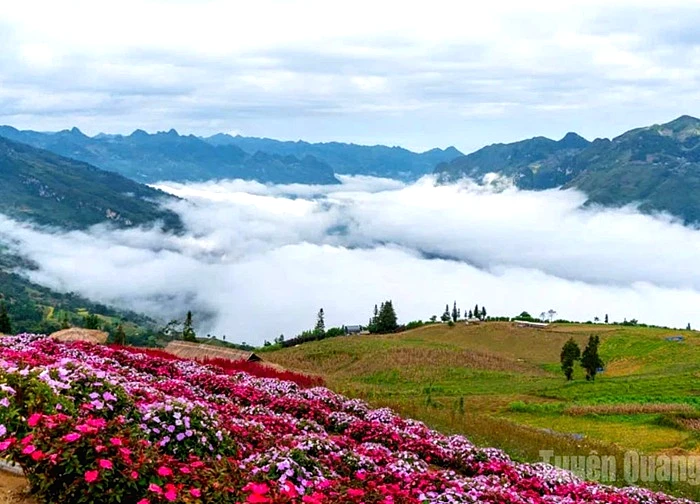
From high vantage points in Vietnam’s far north, visitors can see mountain ranges stretching to the horizon. That vastness is part of what makes Tuyen Quang memorable: not only dramatic scenery but also a sense of entering an open region where each stop offers a different experience.
Tuyen Quang tourism connects nature, history and community
Across the province, varied terrain creates a chain of destinations that complement one another. In the highlands, the Dong Van plateau stands out with its sheer cliffs and winding passes. Landmarks such as Lung Cu Flag Tower, Ma Pi Leng Pass and the old quarter of Dong Van are familiar to many travellers. They are places to take photographs, but they also invite visitors to engage with the region’s history and ethnic cultures, including the Hmong, Lo Lo and Dao communities.
Leaving the karst highlands, journeys move into gentler hills, valleys and river systems. The Na Hang – Lam Binh nature reserve offers clear blue water, layered peaks and a diverse ecosystem. Here tourism emphasises activity as much as sight-seeing: boating, guided forest walks and slow-paced stays that let visitors experience rural life.

The province now promotes an integrated approach to travel. Rather than isolated attractions, sites form an open tourism ecosystem. From the plateau to terraced fields and river-based ecotourism, each stop has its own character. Local officials stress that this variety keeps the visitor experience fresh and encourages longer stays.
Community-led tourism and conservation shape growth
Local leaders say the priority is balance. Tr?n Ð?c Chung, Chairman of the People’s Committee of Lung Cu commune, says the aim is not to chase visitor numbers but to preserve natural spaces so destinations remain unspoiled. “We want guests to feel the rhythm of daily life, the scenery and the people of the highlands,” he added.
Many of the 34 highlighted sites are not large built attractions but everyday places: a quiet village, a flower-filled valley or a stilt house hosting guests. Community members are active partners in tourism, moving from being observed to telling their own stories. This model helps build long-term value rather than temporary gains from headline-grabbing sites.
Tuyen Quang’s tourism performance underlines the strategy’s commercial potential. In the first 11 months of 2025 the province received more than 3.56 million visitors, including nearly 500,000 international arrivals, with total tourism spending estimated at about 9,639 billion VND. Those figures show how connected experiences can translate into significant local revenue.
International recognition and future prospects
Recognition from bodies such as the World Travel Awards and UN Tourism has raised the profile of destinations like the Dong Van plateau and community models such as Lo Lo Chai village. Awards give overseas travellers added confidence and support the projection of Tuyen Quang on the international tourism map.
As competition intensifies in regional tourism, Tuyen Quang is choosing depth over scale. By linking natural attractions, historical sites and living culture into coherent routes and community-led products, the province aims to offer visitors meaningful experiences that encourage return visits. For many travellers the lasting appeal is not how many places they have ticked off but the sense of slowing down in a region that retains much of its original character.
Key Takeaways:
- Tuyen Quang tourism links natural sites, historic attractions and community stays into continuous visitor routes.
- The province recorded 3.56 million visitors in 11 months of 2025, generating about 9,639 billion VND.
- Local authorities prioritise conservation and community-led tourism over mass development.
- Awards and international recognition strengthen Tuyen Quang’s appeal to overseas travellers.








