











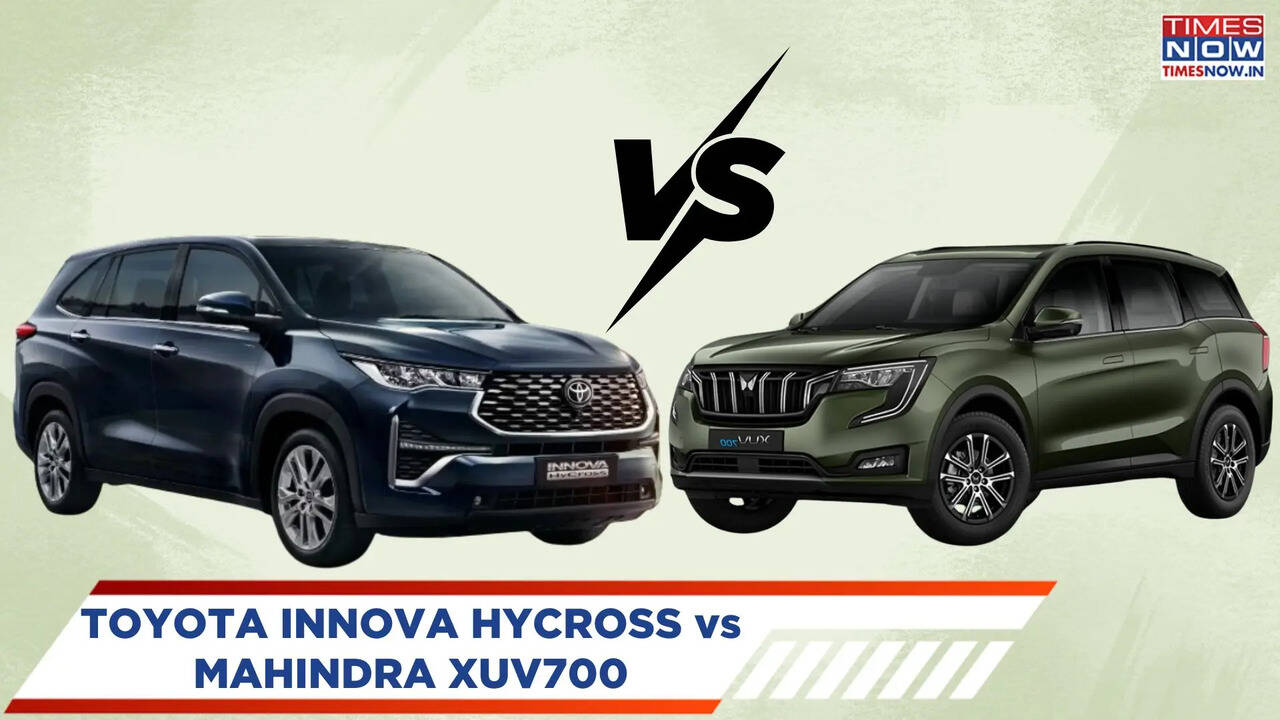
If you are weighing up a large family car, the Toyota Innova Hycross and the Mahindra XUV700 are two leading choices in India. Each promises safety and practicality, but they approach design, packaging and performance with different priorities. The Innova Hycross favours space, refinement and fuel economy, while the XUV700 focuses on power, in-cabin technology and a bolder appearance.
Toyota Innova Hycross vs Mahindra XUV700: design and interior
The Innova Hycross is a multi-purpose vehicle that emphasises passenger comfort and a calm cabin atmosphere. Its styling is restrained and premium, suited to families and chauffeur-driven use. High roofline and generous glass area help create a roomy feel, and third-row passengers benefit from noticeably better legroom than many rivals.
The XUV700 is a sports utility vehicle with a more aggressive stance. Its muscular lines and prominent grille give it strong road presence, appealing to buyers who prefer a self-driven, sporty image. Interior design is modern, with a focus on technology and driver engagement rather than maximum third-row space.

Powertrains and economy
Toyota offers the Innova Hycross with a 2.0-litre petrol engine and a 2.0-litre strong hybrid option. The hybrid is tuned for relaxed, quiet operation in urban conditions and delivers the best fuel economy in this comparison. Official figures indicate around 16.13 kmpl for the petrol and about 23.24 kmpl for the hybrid, making it attractive for buyers prioritising running costs.
The Mahindra XUV700 provides more performance-oriented choices, including a 2.0-litre turbo petrol and a 2.2-litre diesel. These engines offer brisk acceleration and composed high-speed cruising, particularly on the highway. Fuel figures for the XUV700 typically range from 13–17 kmpl for petrol and roughly 16–17 kmpl for diesel, which is respectable but falls short of the Hycross hybrid.
Practicality, seating and features
Space is a strong suit for the Innova Hycross. With all three rows in use it still leaves useful boot capacity (around 300 litres in typical layouts) and the ride is tuned for comfort rather than sharp handling. This makes the Hycross a pragmatic choice for long family journeys or frequent passenger work.
The XUV700 performs well as a five-seater for long trips, while its third row is better suited to occasional use. Where the XUV700 stands out is technology: dual 10.25-inch screens, a premium audio system and a comprehensive ADAS package deliver a contemporary, high-tech cabin experience. Toyota counters with a simpler, reliability-focused interior and Toyota Safety Sense for driver assistance.
Safety and ownership
Both models carry strong safety credentials and score highly in crash testing. Toyota’s reputation for long-term reliability and low ownership stress is a key selling point for many buyers. Mahindra offers robust build quality and cutting-edge safety electronics, which will appeal to purchasers seeking features and performance at a competitive price.
In short, choose the Toyota Innova Hycross if you want maximum passenger comfort, superior hybrid economy and a spacious cabin for regular family use. Opt for the Mahindra XUV700 if you prefer SUV styling, stronger engine options and an advanced, tech-rich interior.
Key Takeaways:
- Toyota Innova Hycross vs Mahindra XUV700 targets different buyers: the Hycross prioritises comfort and efficiency, the XUV700 emphasises performance and technology.
- Innova Hycross offers hybrid efficiency and superior third-row comfort, making it ideal for regular family travel.
- XUV700 delivers stronger engine options, advanced ADAS and a modern cabin, suiting drivers who value tech and sporty performance.
- Both models score highly for safety; choose on the basis of seating needs, fuel economy and feature preference.








