











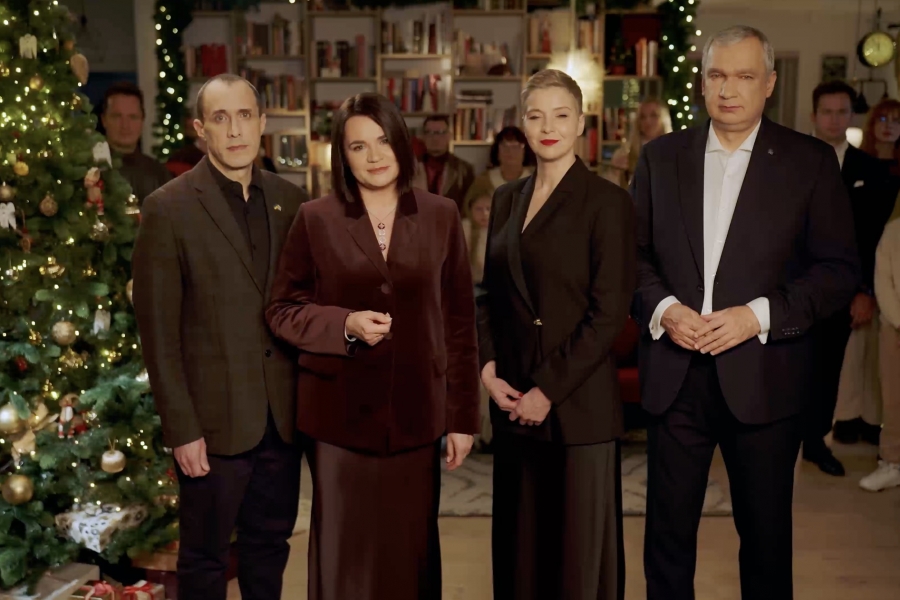
Sviatlana Tsikhanouskaya and other leading exiled Belarusian figures issued a joint New Year address that blended personal reflection with a political appeal for unity, human rights and a peaceful future for Belarus.
Belarus New Year message emphasises hope and unity
Tsikhanouskaya opened the address by recalling a childhood New Year game of deciding what to leave behind and what to take forward. She said she would leave behind divisive arguments, state propaganda and the injustice that has touched many Belarusians. Her chosen word for the year is hope, she said, and she urged citizens to be active creators of the future rather than waiting for miracles.
The message criticised current authorities for pushing the country towards militarisation and isolation. Tsikhanouskaya warned that military facilities, drones and the stationing of heavy weaponry risk turning Belarus into a target. She framed these developments as further reasons for Belarusians to hold fast to democratic values and to prepare for a future in which the country can determine its own course.

Maria Kalesnikava, recently released after years in detention, described the emotional return to family and the simple, human comforts that remained important while she was imprisoned. She reflected on what Belarusians had managed to preserve despite hardship: cultural work, language, and solidarity. Kalesnikava said she had lost much during five years behind bars but had not lost hope in fundamental values such as compassion and kindness.
Pavel Seviarynets highlighted the civic efforts that sustained political prisoners and their families. He thanked those who provided material and moral support and urged continued campaigns to secure the release of those still detained. Seviarynets also linked the fate of Belarus to that of Ukraine, arguing that a free and secure Ukraine helps open the path to an independent, European Belarus.
Pavel Latushka addressed state employees directly, urging them to consider the legacy they wish to leave. He called for dialogue aimed at resolving the country’s political crisis and restoring independence and freedom. Latushka appealed to officials to choose the future of the nation over personal job security, saying that Belarusians themselves are capable of building a better life.
Throughout the address the speakers returned to practical themes: strengthening civil society, supporting journalists and teachers, protecting cultural institutions and ensuring medical and economic resilience. They called for solidarity rather than division and asked citizens to remember those who remain detained or in exile as they mark the turn of the year.
The joint message combined personal anecdotes with concrete political aims. It did not offer an immediate roadmap for change, but it reinforced a familiar opposition line: that durable change will come from organised, peaceful civic action and international solidarity. As the speakers closed, they repeated a simple appeal to Belarusians to remain united, to carry hope into 2026 and to act together to create the future they want.
Happy New Year, the address concluded, long live Belarus.
Key Takeaways:
- Belarus opposition figures led by Sviatlana Tsikhanouskaya deliver a hopeful New Year address calling for unity and human rights as they criticise the regime.
- The Belarus New Year message stresses support for political prisoners, solidarity with Ukraine and concern over militarisation.
- Speakers including Maria Kalesnikava, Pavel Seviarynets and Pavel Latushka urge dialogue, civic responsibility and preparation for a peaceful future.








