











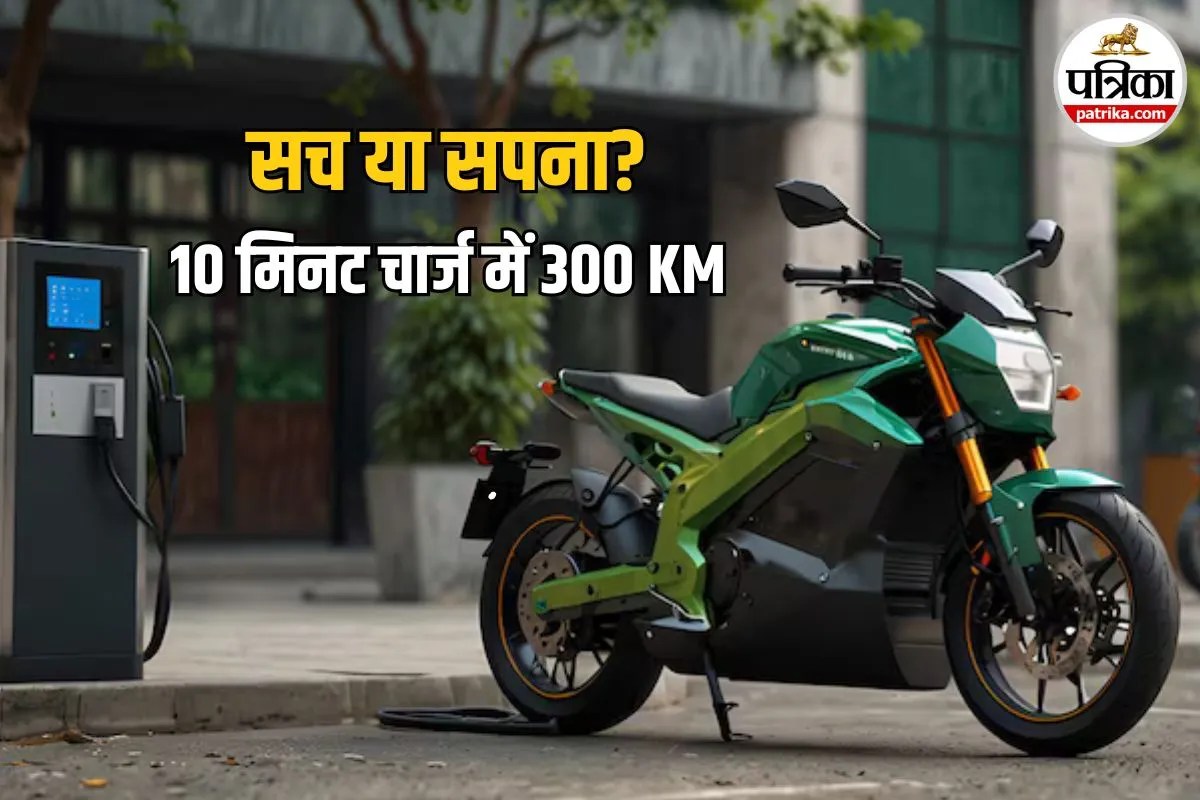
A resident of Gogunda village near Udaipur has claimed a notable breakthrough in affordable electric mobility. According to local accounts, the young inventor assembled a motorcycle from salvaged parts and aftermarket components that he says can travel up to 300 KM on a single charge and be recharged in roughly 10 minutes. The project has drawn attention locally and prompted interest from engineers and entrepreneurs in the region.
300 KM Range Electric Bike Achieves 10-Minute Charge
The inventor, who completed the prototype using largely reclaimed materials, says the design combines a high-density battery pack with an improved power-management system. Local technical observers have praised the ingenuity of converting scrap into a working electric vehicle, but they also urged caution. Independent laboratory tests, certification and safety checks will be needed to verify range, charging time and long-term reliability.
Rapid charging and extended range are among the key barriers to broader electric vehicle adoption in India. High purchase prices and long charging times make many buyers hesitant, especially outside major cities. A functioning low-cost motorcycle capable of long-distance travel and fast recharging could change the economics for many commuters and rural users, provided the claims stand up to scrutiny.

Industry figures welcomed the attention the prototype has attracted. Some noted that grassroots innovation is an important complement to formal research and development, particularly for adapting technology to local conditions. Small-scale builders can test practical solutions that larger manufacturers may not prioritise, and successful ideas can feed into broader industrial development.
However, experts emphasised several technical and regulatory hurdles. Battery chemistry, thermal management and charging infrastructure are critical to both performance and safety. Fast charging at the scale of minutes typically requires advanced battery technology and robust cooling. Without standardised testing, reported performance can be optimistic. Authorities will need to check for electrical safety, battery containment and crashworthiness before any conversion reaches the market.
There are also questions about commercial viability. Scaling a prototype into a product requires supply chains for reliable components, quality control and after-sales service. Cost estimates must include certified batteries and controllers rather than second-hand parts. Entrepreneurs and local manufacturers may find opportunities in supporting such innovators with technical expertise and access to testing facilities.
The social and environmental benefits could be significant if the claims are validated. Affordable electric two-wheelers would reduce household fuel expenditure, lower urban air pollution and cut carbon emissions. Rural communities, where public transport is sparse, may particularly benefit from low-cost, long-range electric transport that does not require frequent charging stops.
For now, the Gogunda prototype is an example of practical ingenuity and local problem solving. Engineers and policy makers will be watching for independent test results and any steps by the inventor to work with accredited labs, manufacturers or government programmes. If confirmed, the development could provide a timely demonstration of how grassroots innovation can contribute to wider electrification and sustainable mobility goals.
Key Takeaways:
- A young inventor from Gogunda, Udaipur claims to have built a 300 KM Range Electric Bike using salvaged parts.
- The bike is reported to recharge in around 10 minutes, addressing a major barrier to EV adoption.
- Experts stress the need for independent testing and safety certification before mass adoption.
- If validated, the development could improve affordability and boost local EV innovation.








