











Key Takeaways:
- Satellite and aerial data show the Unnamed Kamchatka volcano recovery has rebuilt most of the pre‑1956 cone.
- Post‑1956 lateral blast removed the summit but gradual effusive activity has filled the crater, adding about 26,400 m³ of material per day on average.
- The volcano reached around 3,020 m by 2017 and may regain its former 3,113 m height by 2030–2035 if growth continues.

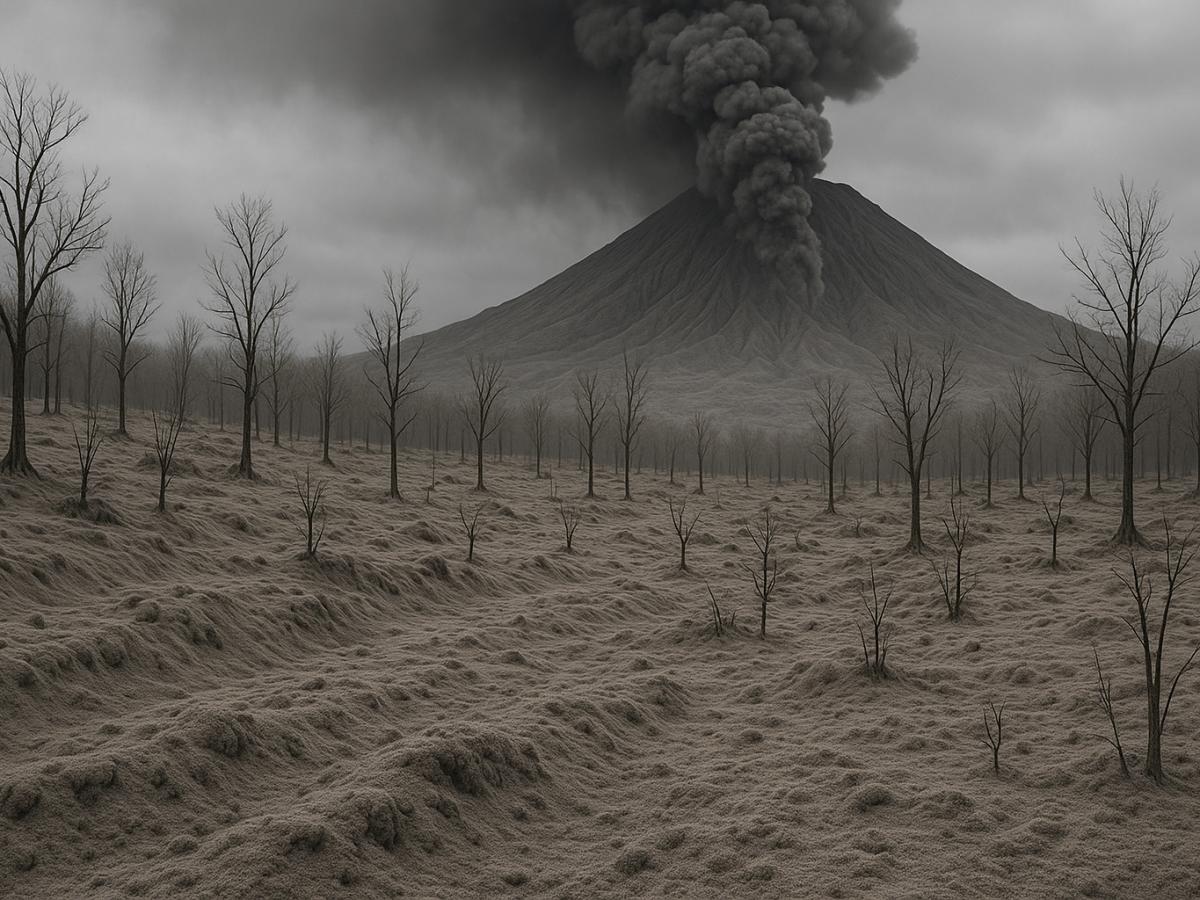
Scientists report that an unnamed volcano on Russia’s Kamchatka Peninsula has largely rebuilt its summit following one of the most violent eruptions of the 20th century. The 1956 lateral blast removed the mountain’s top and left a 1.3 kilometre wide horseshoe crater, but more than six decades of observations show steady constructive activity that has restored much of the cone.
Unnamed Kamchatka volcano recovery tracked by satellites
On 30 March 1956 a powerful side blow-out on the volcano’s eastern flank expelled more than 0.7 cubic kilometres of rock. The event reshaped the volcano, altered its internal stress distribution and diverted pathways for rising magma. Immediately after the eruption, researchers observed the formation of multiple lava domes within the amphitheatre created by the collapse. These domes appeared at vents separated by hundreds of metres and produced an initially explosive and chaotic phase of activity.
From the late 1960s the volcano shifted to a more constructive behaviour. Effusive eruptions gradually predominated over explosive episodes. Scientists now calculate that between 1956 and 2017 the system added roughly 26,400 cubic metres of material per day on average, progressively filling the crater left by the lateral blast. From 1977 onward, longer lava flows of lower viscosity began to spread, allowing the new edifice to take on a more symmetrical cone shape.
Remote sensing has been central to documenting the recovery. Modern satellite imagery and aerial photography, combined with digital three‑dimensional models, allow researchers to follow year‑by‑year changes in morphology. By 2013 the stratovolcanic architecture had become clearly recognisable again, with alternating pyroc la stic and effusive layers. By 2017 the peak reached about 3,020 metres, less than 100 metres below its pre‑1956 height of 3,113 metres.
Current projections suggest that if present growth rates persist the volcano could regain its former elevation between 2030 and 2035. That near recovery, backed by half a century of data, makes this volcano one of the most thoroughly documented examples of volcanic regeneration in the world.
Researchers highlight that the return of an external cone does not guarantee stability. Geological records show repeated flank collapses in the Holocene. As the cone grows, stress redistributes within the edifice and the underlying magma system. Numerical models indicate that eruptive centres have gradually migrated toward the new cone’s centre as internal stresses evolved. This centralisation may indicate a degree of temporary stabilisation, but it also concentrates load on weakened sections of the flank.
That tension explains why the mountain remains potentially hazardous. A reconstructed summit may again be vulnerable to large-scale collapse, similar to the 1956 event, especially if rapid loading or changing eruption styles reintroduce instability. Scientists therefore stress the value of continuous monitoring: the combination of satellite data, aerial photography and field studies provides rare long-term insight into links between volcano shape, eruption style and magma chemistry.
Beyond regional interest, the Unnamed Kamchatka volcano recovery offers an important natural laboratory for volcanology. The detailed record helps refine models of volcanic growth and collapse, informs hazard assessments for populated regions and improves understanding of how magmatic systems adapt after catastrophic structural disturbances.








