











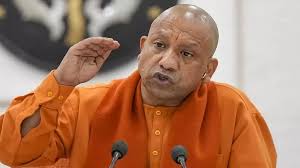
Chief Minister Yogi Adityanath on Friday directed officials to accelerate rural development works as part of a wider push to make Uttar Pradesh gram panchayats self-reliant. Speaking at a review meeting of the Panchayati Raj Department in Lucknow, he underlined that the state can attain broader self-reliance only when its village councils generate their own resources and infrastructure.
Uttar Pradesh gram panchayats at centre of development drive
The chief minister asked officials to prepare and implement action plans to boost the incomes of gram panchayats and to hasten ongoing projects. He called for a strengthened monitoring system to ensure timely completion of each scheme and recommended monthly video conference reviews alongside an annual in-person assessment in Lucknow.
Officials told the meeting that the state had set a target of 967,000 individual household toilets for the current fiscal year, of which 479,000 have been completed so far. Uttar Pradesh now accounts for 28 per cent of all individual toilets constructed in India this year, a fact the chief minister noted as evidence of progress on sanitation goals.

On waste management, the department reported that 103 of 282 planned plastic waste management units have been completed and 132 are under construction. These units currently cover 304 development blocks and are supported by 515 urban MRF-linked blocks. Mr Yogi urged faster execution for the remaining units.
Revenue realisation by district panchayats also received praise. Collections last year totalled Rs 334.10 crore, meeting around 81.23 per cent of the target. For the current year, collections up to November stood at Rs 271.48 crore, achieving 140.89 per cent of the target, prompting commendation from the chief minister and a call to further expedite recovery efforts.
The chief minister provided operational guidance on the use of community halls or ‘utsav bhavans’, directing that they be prioritised for auspicious ceremonies and opened for yoga and wellness activities on other days. He also asked that scheduling allow maximum community access when multiple functions occur, and urged blocks to extend similar plans.
Under the Matrubhoomi scheme, Mr Yogi asked officials to strengthen ties with migrants by associating projects with the names of migrants’ ancestors where donors contribute, and to honour contributors at state-level events to inspire wider participation.
Technical sanitation work also featured in the discussion. The chief minister instructed officials to adopt proven national methods to treat sewer and greywater for reuse in agriculture and horticulture. He ordered the rapid commencement of 160 community sewage treatment plants (FSTPs) across the state and asked for focused attention on these installations.
On education and community resources, the government has targeted the establishment of 11,350 digital libraries. Mr Yogi demanded that library equipment and furniture be of high quality and that books reflect local students’ needs. He also directed the creation of integrated village campuses where possible, combining schools, utsav bhavans, playgrounds, open gyms, parks and model shops to provide basic amenities within easy reach of residents.
Finally, the chief minister called for open public forums in every gram panchayat to share information about government schemes, verify beneficiaries and identify new ones. He reminded officials that 15 to 16 people employed by the government in village secretariats should be used to publicise schemes and assist with beneficiary outreach.
With a combination of improved sanitation, waste management, revenue mobilisation and community infrastructure, the state government intends to make each gram panchayat a hub of self-reliant development.
Key Takeaways:
- Chief Minister Yogi Adityanath urges measures to make Uttar Pradesh gram panchayats self-reliant through income generation and infrastructure.
- State leads the country in individual household toilet construction and is advancing plastic waste units and sewer treatment projects.
- Plans include integrated village campuses, digital libraries and optimised use of community ‘utsav bhavans’ for public benefit.
- Enhanced monitoring, revenue collection gains and schemes to engage migrants aim to sustain rural development.








