











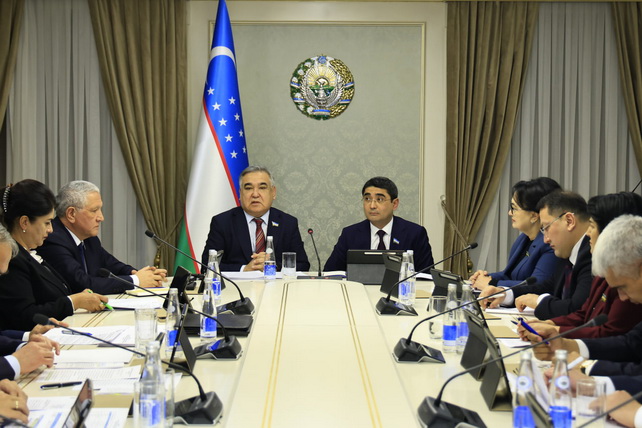
Senior lawmakers and government officials from Uzbekistan and Azerbaijan met in Tashkent to assess progress on previously signed bilateral documents and agree measures to speed up implementation. The joint session, attended by members of the Senate of the Oliy Majlis, deputies of the Legislative Chamber, and heads of ministries and agencies, focused on turning signed agreements into concrete projects across multiple sectors.
Uzbekistan Azerbaijan bilateral agreements and next steps
Officials presented reports on the status of signed agreements and the implementation of approved roadmaps. Delegates examined progress in transport and logistics, energy, industrial cooperation, and agriculture, and discussed how to accelerate investment projects that are already under way. The meeting placed particular emphasis on ensuring that projects move from planning to execution on schedule and to a high standard.
Participants underlined the importance of improved coordination among the responsible ministries, agencies and private-sector partners. Strengthening interagency communication was described as essential to removing administrative bottlenecks, securing financing, and meeting contractual deadlines. Greater parliamentary oversight was also highlighted as a means to ensure transparency and accountability in implementing bilateral commitments.

Trade and economic cooperation emerged as a central theme. Delegates discussed measures to expand bilateral trade volumes, promote joint ventures, and attract targeted foreign investment. Specific sectors identified for priority action included transport corridors that link Central Asia to the Caucasus, joint energy projects, industrial parks and clustering, and agricultural co-operation aimed at boosting productivity and market access.
The meeting’s format brought together a broad group of stakeholders, including representatives of relevant associations and organisations. Their participation helped to identify practical hurdles facing investors and operators, from regulatory alignment to infrastructure needs. By reviewing approved roadmaps, officials sought to harmonise timelines and responsibilities so that investments yield results more quickly.
At the close of the session, attendees adopted a set of decisions and recommendations intended to improve the practical effectiveness of the agreements and secure their full implementation. These measures call for clearer responsibility matrices, regular progress reporting, streamlined permitting procedures where appropriate, and enhanced support for joint investment projects.
Officials also agreed to increase the frequency of coordination meetings and to establish monitoring mechanisms that will allow parliaments and executive bodies to track progress. Such mechanisms are intended to provide early warning of delays and enable corrective action before projects stall. This approach aims to ensure that high-priority initiatives — particularly those with cross-border transport or energy components — proceed without avoidable disruption.
Observers say that the steps agreed in Tashkent reflect a practical, delivery-focused approach to bilateral cooperation. By concentrating on implementation, the two countries aim to turn diplomatic commitments into tangible economic benefits for businesses and communities on both sides. The decisions taken at the meeting set the framework for closer economic ties and more effective joint projects in the year ahead.
Key Takeaways:
- Parliamentary committees and government agencies reviewed implementation of Uzbekistan Azerbaijan bilateral agreements and approved roadmaps.
- Focus on expanding trade, investment, transport, energy, industry and agriculture to accelerate joint projects.
- Participants called for stronger coordination, enhanced parliamentary oversight and timely execution of initiatives.
- A set of decisions and recommendations was adopted to ensure practical effectiveness and full implementation.








