











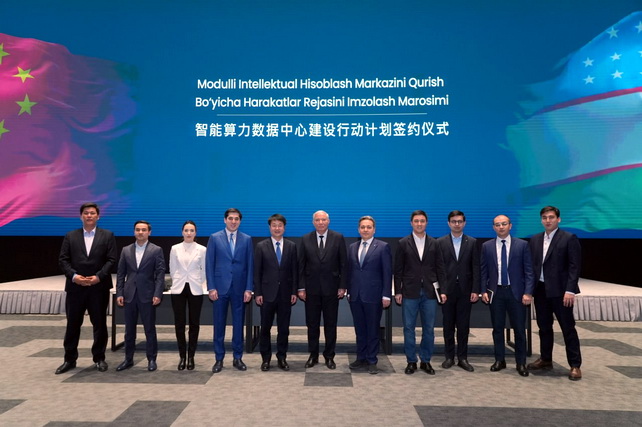
Uzbekistan has moved to strengthen its digital infrastructure with a plan to establish a Modular Intelligent Computing Centre in the Republic of Karakalpakstan, officials announced following a trilateral meeting organised under a presidential decree on artificial intelligence.
The agreement, signed by the Ministry of Digital Technologies and Shanghai Linkwise Data Intelligence Co., Ltd., sets out a roadmap for a centre that the founder and chairman of the Chinese firm, Huhui Wang, said is due to be operational by 2027. The project will proceed as direct foreign investment and is framed as part of a broader policy push under the decree “On additional measures for the further development of artificial intelligence technologies.”
Modular Intelligent Computing Centre Uzbekistan set for 2027 launch
At the trilateral meeting, participants examined legal and institutional arrangements, state support mechanisms and the operational steps required to deliver the centre. A formal Cooperation Agreement followed, creating a strategic partnership intended to guide construction, equipment procurement and the phased introduction of services.

Officials described the centre as a modular computing facility that will house high-performance hardware, support the deployment of AI-based applications and provide a platform for research and innovation. The initiative emphasises capacity-building, with plans to train local specialists and develop programmes to sustain technical skills in the region.
Project planners say the centre will serve multiple functions: accelerating public and private sector access to advanced computing resources, supporting domestic research agendas and enabling local companies to pilot intelligent computing solutions. By adopting a modular design, the facility aims to scale in line with demand and technological advances.
State representatives at the meeting outlined fiscal and regulatory incentives intended to attract investment and lower barriers to entry for foreign technology partners. The jointly approved roadmap allocates responsibilities between national authorities and the private partner and identifies key milestones ahead of the 2027 launch date.
Shanghai Linkwise will contribute technical expertise and capital, while the Ministry of Digital Technologies will coordinate permits, infrastructure connections and workforce development. Huhui Wang said the company sees Uzbekistan as a strategic partner for expanding intelligent computing services in Central Asia.
Analysts note several potential benefits from the project. The centre could shorten the time to market for machine-learning deployments in Uzbekistan, support universities and research institutes with compute capacity, and provide an anchor for further foreign direct investment in the technology sector. Local employment is expected to rise through construction, operations and training initiatives.
Challenges remain. Project success will depend on timely delivery of infrastructure such as power and fibre connectivity, effective regulatory oversight and sustained investment in skills. Observers say close coordination between government and private partners will be essential to avoid delays and ensure the centre serves wider national priorities.
The agreement represents a new phase in Uzbekistan’s digital transformation and signals the government’s intent to attract international technology partners. With the roadmap in place, the country is positioning itself to host advanced computing resources that could underpin research, public services and commercial innovation across the region.
Key Takeaways:
- Uzbekistan signs cooperation to establish a Modular Intelligent Computing Centre in Karakalpakstan with a 2027 launch target.
- Shanghai Linkwise Data Intelligence and the Ministry of Digital Technologies will implement the project through direct foreign investment.
- The plan includes advanced computing infrastructure, AI-based solutions, specialist training and research activities.
- The Modular Intelligent Computing Centre Uzbekistan is backed by a presidential decree and a jointly approved roadmap.








