











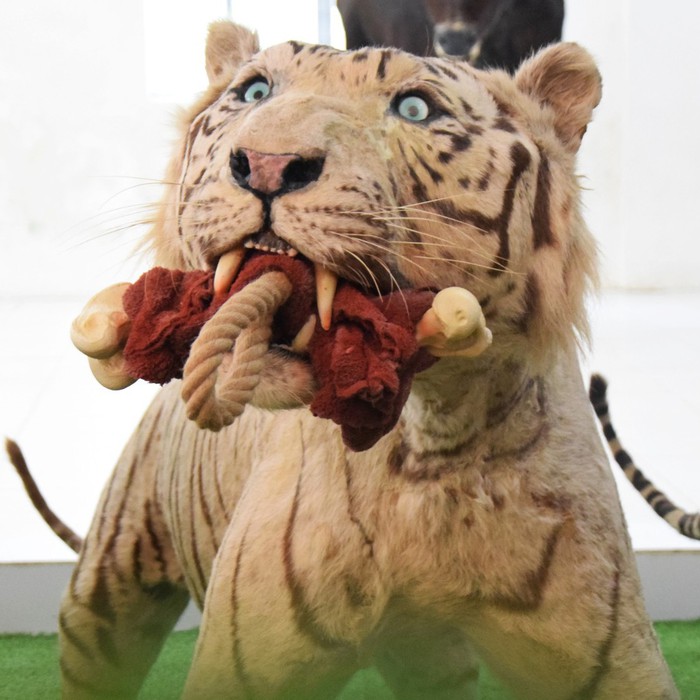
The Saigon Zoo & Botanical Garden has put on public display a taxidermied specimen of Ngộ Không, the white tiger born at the park on 8 July 2015 and taken ill in July 2025. The animal, who died at the age of 10, has been positioned prominently at the entrance to the zoo’s museum, where it is drawing steady attention from visitors.
Ngộ Không white tiger remembered
Ngộ Không first captured visitors’ attention as a playful cub. Staff recall the young tiger’s energetic behaviour, from tugging on its mother’s tail to dragging logs and interacting with enclosure features. As it matured, Ngộ Không shared its habitat with two female white tigers introduced as companions and was often seen exploring the pond-lined enclosures.
Following a severe illness in July 2025, the zoo confirmed the tiger’s death. To preserve the animal’s physical features and the memory it inspired, the Saigon Zoo prepared a taxidermy specimen which is now installed at the museum entrance. The visible placement has encouraged fans and families to pay their respects and to reflect on the bond between the public and animals in captivity.

Specimen on display supports conservation education
The museum that houses Ngộ Không’s specimen is not solely a memorial. It functions as a repository for a wide range of zoological exhibits, storing specimens that span developmental stages and anatomical preparations, from eggs and embryos to skeletons and preserved skins. Curators say these collections are used for both public education and scientific study, helping to illustrate life cycles, anatomy and the importance of species protection.
By situating Ngộ Không’s specimen at the museum entrance, the zoo aims to offer visitors an immediate, tangible encounter with an individual animal’s story while directing attention to broader conservation messages. Educational programmes linked to the museum use preserved specimens to explain threats to wildlife, the role of captive breeding in endangered species management, and practical measures that can help native and rare species survive.
Public reaction to the exhibit has been mixed, reflecting the complex feelings many people have towards taxidermy and the ethics of keeping animals in captivity. Nevertheless, zoo officials emphasise that the primary intent is educational. The preserved tiger serves as a tool to inform visitors about tiger biology, conservation challenges, and the importance of supporting habitat protection and responsible wildlife management.
Saigon Zoo’s decision follows a wider trend among zoological institutions to balance remembrance with learning. When individual animals that have become well known to the public die, museums and educational centres often retain specimens to preserve a record of the species and to support ongoing research. For visitors who grew up seeing Ngộ Không at the zoo, the exhibit offers a chance to remember the animal’s presence while gaining new understanding of conservation work.
As the museum continues to attract visitors, the display of Ngộ Không underscores the Saigon Zoo’s commitment to both commemorating animals that have been part of its community and using those stories to promote awareness of wildlife protection. The specimen stands as a reminder of the responsibilities that come with stewardship of rare animals and the role of education in encouraging informed public support for conservation.
Key Takeaways:
- Ngộ Không, a white tiger born at Saigon Zoo on 8 July 2015, died after illness in July 2025 at age 10.
- The zoo has placed a taxidermy specimen of Ngộ Không at the museum entrance as a public farewell and educational display.
- The museum preserves animal specimens, from eggs to bones, to support conservation awareness and scientific study.
- The display aims to honour the tiger and help visitors learn about species protection and zoo care.







