











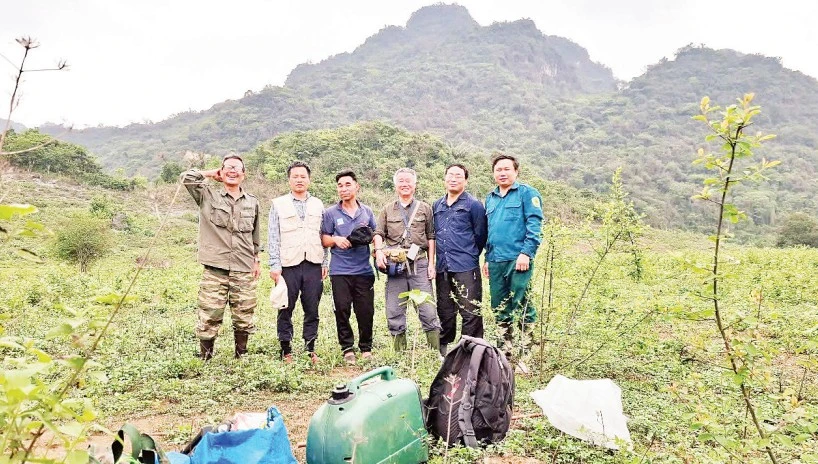
Vietnam has published a major update to its national Red List, recording 1,398 species as threatened across animals, plants and fungi. The new assessment, completed between 2020 and 2024, nearly doubles the number of listed species compared with the 2007 edition and provides a fresh evidence base for conservation planning and policy.
Vietnam Red List 2024 key findings
The revised Red List identifies 742 animal species and 656 plants and fungi at various levels of risk. Scientists report an increase of 354 threatened animal species and 196 threatened plant species since the last national compilation. The update documents five animal species now considered extinct or extinct in the wild in Vietnam: the southern Batagur river turtle, Eld’s deer, the white-crested fireback pheasant, the Siamese crocodile and the Javan rhinoceros.
The project was led by Professor Dr Nguyen Quang Truong and colleagues at the Institute of Ecology and Biological Resources (now the Institute of Biology). More than 18 specialist research groups took part, covering taxa from mammals, birds, reptiles and amphibians to fishes, insects, plants and fungi. Researchers reviewed and updated over 1,500 species dossiers to bring assessments in line with current knowledge and international standards.

A key output is the Vietnam Red List database, now available online at vnredlist.vast.vn. The Vietnamese-language database is fully compatible with the IUCN Red List framework, allowing seamless alignment with global assessments while reflecting the country’s unique biodiversity priorities.
Project records indicate that global drivers such as habitat degradation, climate change and overexploitation continue to threaten Vietnam’s wildlife. The updated Red List is intended to inform national policy, support legal protection of species and prioritise conservation actions. According to the project team, the dataset will also help authorities nominate species for official lists of rare and endangered species under Vietnamese law.
The work was funded and conducted as an Academy-level project, structured across three components: updating species assessments and compiling the new Red Book; building the database and website; and editing and publishing the new Red Book volumes. The publication comprises two volumes: volume one covering animals (742 species) and volume two covering plants and fungi (656 species).
Reviewers note the project has produced peer-reviewed outputs, including two articles in SCIE-indexed journals and three in SCImago-listed journals. The interdisciplinary and collaborative nature of the work — involving universities, research institutes and conservation organisations — is highlighted as a strength that supported rigorous reassessment across many taxa.
For policy-makers and conservation practitioners, the Vietnam Red List 2024 provides updated distribution and status data, population trends and threat analyses that can feed directly into management plans, protected area design and restoration priorities. The project team recommends regular updates to ensure the national Red List remains current and to track the success of conservation measures over time.
Access to the database and the new Red Book volumes will be critical for translating scientific evidence into on-the-ground action to safeguard Vietnam’s biodiversity as the country pursues sustainable and green development goals.
Key Takeaways:
- Vietnam Red List 2024 records 1,398 species at various threat levels, up from 836 in 2007.
- Researchers compiled and reviewed over 1,500 species dossiers and launched an online database at vnredlist.vast.vn.
- The update provides scientific evidence to guide national conservation policy and legal protection measures.








