











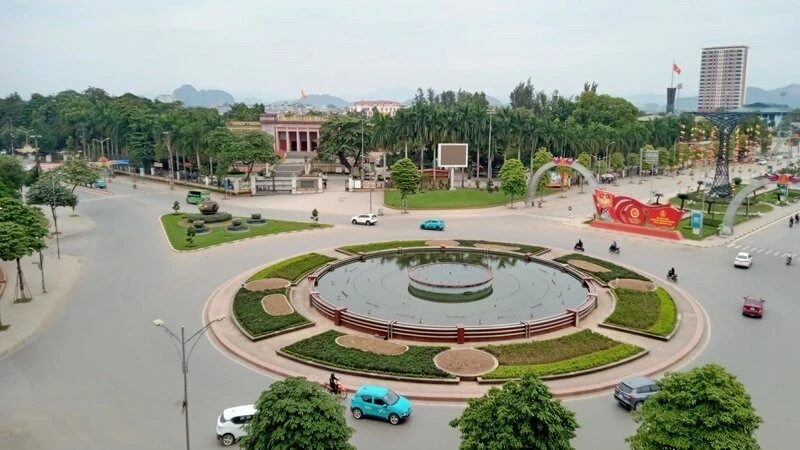
Provincial authorities in Thái Nguyên, northern Vietnam, have accelerated a programme of transport projects that officials say is reshaping the province’s investment profile and unlocking new economic and tourism potential.
Thai Nguyen transport infrastructure to unlock new growth
In the past two to three years, Thái Nguyên has completed and opened several strategic roads, many with central government support. Key finished works include the more than 40km inter‑provincial route linking Thái Nguyên, Bắc Ninh and Phú Thọ — a four‑lane highway integrating with the Hanoi–Thái Nguyên expressway — and a section of the Hanoi Ring Road 5 that passes through the province. These links have improved access to major markets and logistics corridors.
Another recent completion is the nearly 40km road from Bắc Kạn to Ba Bể Lake, built with an investment of roughly 3,700 billion VND and now operational. Thái Nguyên is also working with the Ministry of Construction to fast‑track the Chợ Mới–Bắc Kạn expressway, a nearly 30km section valued at more than 5,700 billion VND and due for completion in 2026; once finished it will dovetail with the Bắc Kạn–Ba Bể route to better serve the region’s tourism assets.

Locally, authorities are moving to accelerate work on the Hồ Chí Minh route segment between Chợ Chu and Trung Sơn, a project with an estimated investment of 1,665 billion VND that will strengthen the Thái Nguyên–Tuyên Quang connection. Several connecting roads serving industrial zones and the province’s urban development nodes have been completed, providing immediate support for investors.
The province has also prioritised urban and tourism links. The extension of Bắc Sơn Road from Thái Nguyên city towards Núi Cốc Lake is nearing completion and is expected to boost visitor numbers and private investment in lakeside resorts. A spur connecting Bắc Sơn to the Thái Nguyên sports complex and stadium is largely finished, helping support events and local cultural activity.
Improved transport has already had measurable economic effects. Since the opening of the Hanoi–Thái Nguyên expressway, six industrial parks in Thái Nguyên covering more than 1,600 hectares have attracted 318 projects, including FDI, with committed capital exceeding $11 billion. Those operations provide employment to over 100,000 workers and generate close to $30 billion in annual exports.
Faced with a shortage of available industrial land in recent years, the province has proactively created new development space by building transport links with wider reach. Developers have completed two industrial clusters — Hạnh Phúc–Xuân Phương and Bảo Lý–Xuân Phương — with combined infrastructure investment of more than 1,000 billion VND and more than 100 hectares ready for secondary investors to begin construction.
On 19 December the provincial government will commence work on the large Phú Bình Industrial Park, a 675‑hectare project with total infrastructure investment of around 11,500 billion VND. The park is being launched as part of events to mark the Party’s 14th Congress and is designed to host advanced technology manufacturers and modern production facilities.
Building on newly available space, Thái Nguyên is planning five additional industrial parks covering nearly 1,700 hectares with infrastructure investment exceeding 25,600 billion VND. Alongside these are residential zones, urban developments and tourism projects already under way or planned as the transport network comes online.
Provincial leaders say the completed and ongoing transport projects create a platform for sustained growth. With improved connectivity and fresh land for investment, Thái Nguyên aims for double‑digit growth over the next five years and to become a leading industrial centre with a higher‑middle income level before 2030.
Key Takeaways:
- Thai Nguyen transport infrastructure projects — including regional links and expressways — are opening new investment and tourism opportunities.
- Major completed and planned works connect industrial parks, Hanoi ring road and Ba Bể, unlocking land for new factories and resorts.
- Completed projects have supported six industrial parks, attracted over 318 projects and $11 billion in FDI; five new industrial parks totalling nearly 1,700ha are planned.
- Officials expect the transport expansion to underpin double‑digit growth and higher average incomes for Thái Nguyên by 2030.








