











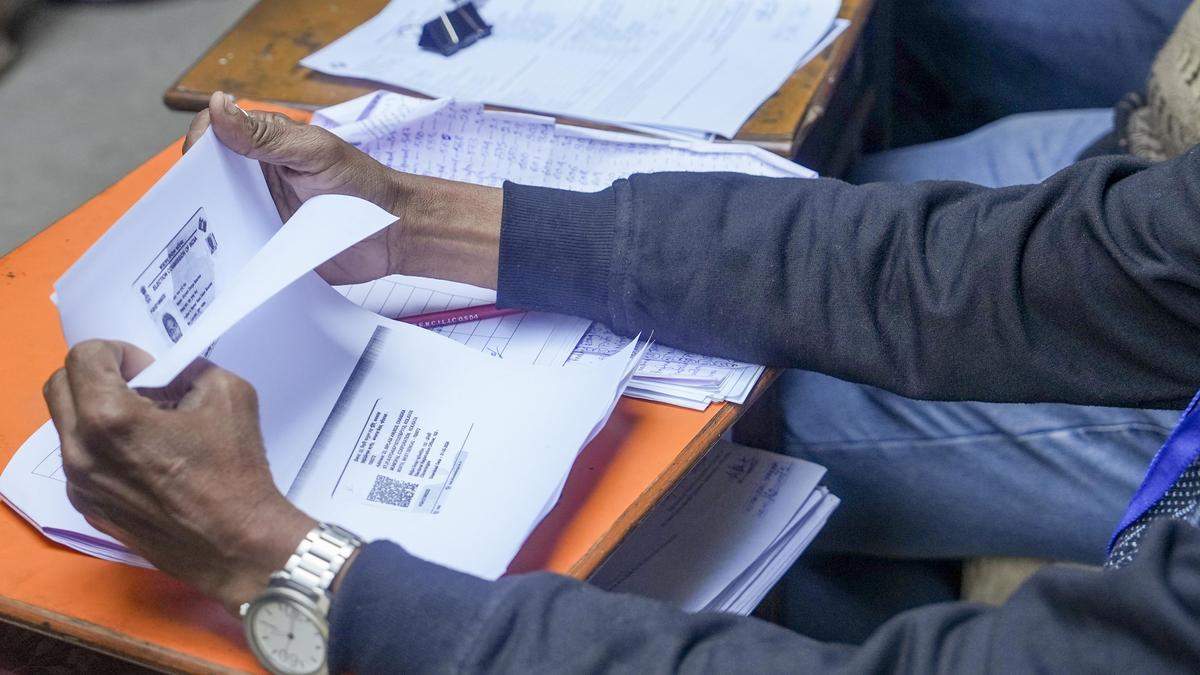
Election authorities in West Bengal have ordered District Electoral Officers to personally visit marginalised and vulnerable communities, including sex workers and tribal groups, to facilitate their inclusion in the electoral roll during Special Intensive Revision (SIR) hearings. The directive, issued by the Additional Chief Electoral Officer on 31 December, follows a video conference led by the Senior Deputy Election Commissioner.
West Bengal voter inclusion
The letter instructs District Electoral Officers, who also serve as District Magistrates, to hold public hearings, record statements and prepare formal proceedings supported by videography. Officials are required to compile verified lists of eligible persons identified during these enquiries and submit them to the concerned DEO and the Chief Electoral Officer of West Bengal.
The move responds to repeated appeals from vulnerable communities seeking relaxation of SIR norms. Many eligible electors have been unable to provide documentary proof or establish linkages to the 2002 voters’ list, which has hindered their registration. Civil society groups and welfare organisations had urged the CEO’s office to take practical steps to prevent exclusion of such voters.

Officials will consult booth-level agents appointed by political parties during enquiries and take their observations into account. The letter states that Electoral Registration Officers and Assistant Electoral Registration Officers shall give due consideration and evidentiary weight to records and proceedings when adjudicating Enumeration Forms.
Activist groups including the Society for Human Development and Social Action, Usha Multipurpose Cooperative Society, Amra Padatik and the Scheduled Caste Federation submitted written appeals to CEO Manoj Kumar Agarwal to protect eligible electors who cannot provide documentary lineage. The CEO’s office previously organised a camp in Sonagachi during the enumeration phase, where EROs, booth-level officers and other officials assisted residents in filling forms and distributed Form 6 and Form 8 for new registrations and corrections.
According to Mr Agarwal, roughly 12,000 electors are enrolled in Sonagachi, and linkage with the 2002 voters’ list has been established for at least 70 per cent. The state’s fresh instructions are designed to capture those who remain unlinked and ensure their cases are heard in a transparent manner.
Election officials say the additional step of videography and formal proceedings aims to strengthen the evidentiary record and speed up the adjudication of enrolment applications. The inclusion drive will be overseen at district level and coordinated with AERO and ERO offices to maintain a centralised record for verification and follow up.
Advocates for marginalised groups welcomed the directive as a practical measure to reduce administrative barriers to voting. Rights workers said outreach in red light areas and tribal communities, combined with a formalised hearing process and consultation with booth agents, should increase the chances that eligible citizens are not disenfranchised for lack of paperwork.
Officials have been told to treat the enquiries as part of the legal adjudication process for Enumeration Forms and to ensure swift disposal of eligible cases in accordance with the law. The implementation of these measures will be closely watched by civil society groups and election observers ahead of the next rounds of revision and future polls.
Key Takeaways:
- State election officials in West Bengal will personally visit marginalised and vulnerable electors to facilitate Special Intensive Revision (SIR) hearings.
- District Electoral Officers must hold public hearings, record statements with videography, and prepare verified lists of eligible persons.
- Booth-level agents and electoral officers will be consulted to ensure evidentiary weight for Enumeration Forms and help include voters who lack documentary proof.








