











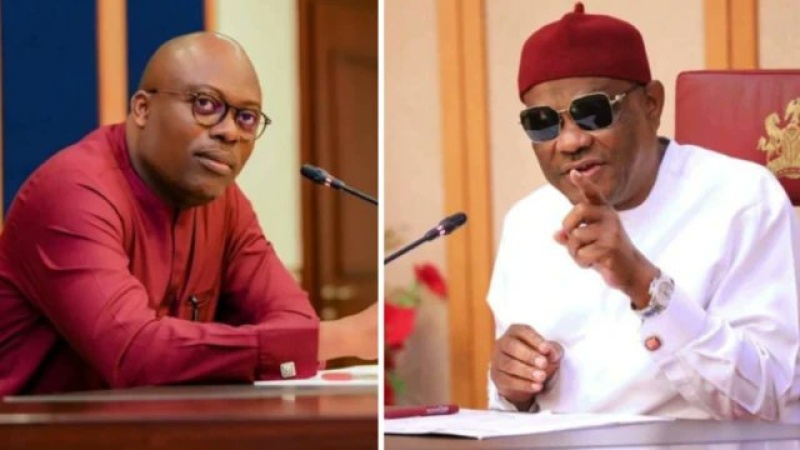
Nyesom Wike, a dominant figure in Rivers State politics and a national political heavyweight, has declared that there will be no second chance for Governor Siminalayi Fubara. His remarks, delivered to a local audience, signal a hardening of positions within the Peoples Democratic Party (PDP) and add to an already tense political atmosphere in the state.
Wike on Fubara
Wike told supporters that decisions must be made and suggested that some political actors have returned to old alliances without delivering meaningful results. “We must make decisions. I heard somebody saying that those who worked for Atiku are back. They couldn’t give Atiku 10 percent. So what is the political advantage? I will not call their names because you all know them,” he said. The comments reflect ongoing disputes over loyalty and effectiveness among party operatives.
The warning is notable because of Wike’s enduring influence in Rivers State and national politics. A former governor of Rivers State and now a federal figure, his interventions have previously reshaped local power dynamics. By publicly dismissing the prospect of a renewed role for Governor Fubara, Wike is asserting a leadership choice that could determine which faction controls the state’s political machinery.

Political observers say the dispute has its roots in internal PDP arrangements and competing networks of patronage. The rift has implications beyond personalities: it affects appointments, access to resources and the ability to mobilise electoral support. Federal-level ambitions and alignments ahead of future elections make control of pivotal states such as Rivers an important strategic priority.
Local sources indicate that the disagreement centres on governance performance and political loyalty. Wike’s comment about those who supported Atiku suggests frustration with allies who, in his view, failed to convert support into tangible returns. The mention of Atiku — a prominent national figure — also hints at wider factional calculations within the PDP.
For residents of Rivers State, the dispute raises practical concerns. When party leaders are locked in public dispute, the effect can be administrative paralysis and uncertainty for state projects. Businesses and investors watch such quarrels closely because political instability can delay contracts, slow implementation of public works and complicate regulatory decisions.
Analysts caution that while public rebukes are serious, they do not always translate into an immediate change of office. Political manoeuvres can play out over months, including negotiations, party disciplinary processes and appeals to national party organs. Wike’s statement, however, will increase pressure on allies to choose sides and could precipitate a faster resolution to the contest for control in Rivers.
Looking ahead, the dispute may influence candidate selection and coalition-building in forthcoming elections. If Wike’s faction consolidates influence, it may determine which candidates receive party backing and how campaign resources are allocated. Conversely, persistent division could open opportunities for rivals inside and outside the PDP.
For now, Wike’s clear stance marks a turning point in the public phase of the dispute. Political watchers in Nigeria will follow subsequent meetings, party pronouncements and local responses to see whether the statement leads to reconciliation, a reshuffle of personnel or a prolonged standoff. Whatever follows, Rivers State’s politics are likely to remain a focal point for national observers.
Key Takeaways:
- Influential politician Nyesom Wike says there will be no second chance for Siminalayi Fubara in Rivers State politics.
- Wike criticised past allies who supported Atiku, questioning their political value to the state.
- Statement underscores growing tension within the Peoples Democratic Party in Rivers State and could reshape local alliances.








