











Wordspin’s books of the year for 2025 foreground works that reconnect readers with language, place and imaginative inquiry. The selection highlights how regional writing and careful archival scholarship continue to shape cultural memory and public debate in Assam and beyond.
Assamese literary heritage at the heart of 2025 selections
At the centre of this year’s list is an insistence that language is not neutral. Anubhav Tulasi’s posthumous collection Jumuthir Sourojug presents essays and interviews in which he argues that poetry grows from the contours of the land and its speech. Tulasi writes that his allegiance to Assamese is the result of a poetic practice that makes the living resource of the language converse with the world. Readers familiar with his verse will find the essays revealing because they map the contemplative processes that shaped his work.
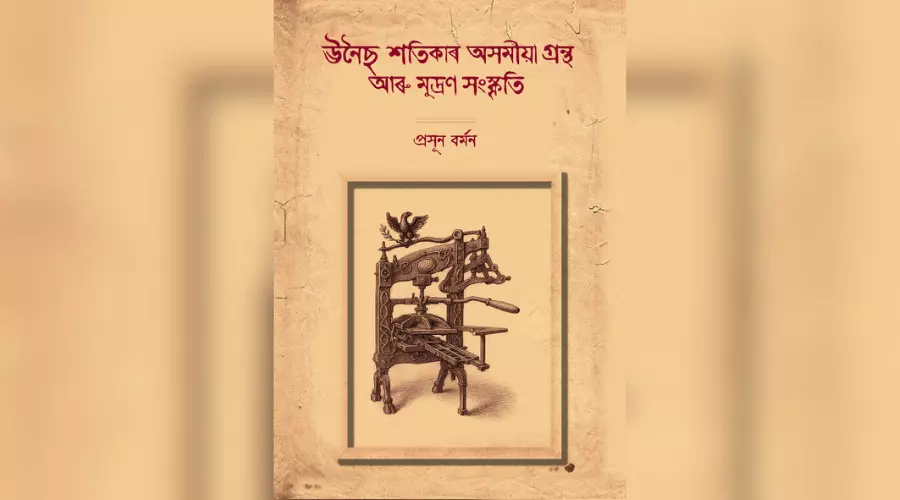
Prasun Barman’s Unaish Satikar Asamiya Grantha aru Mudran Sanskriti provides a complementary perspective by tracing the history of print culture in Assam. Barman resists a simple catalogue approach. Instead he reconstructs the social and material conditions that gave rise to early nineteenth-century publishing, bringing to light the stories behind pioneering titles such as Anandaram Dhekial Phukan’s Asomiya Lorar Mitra and Gunabhiram Barua’s Geography for Assamese Children. His detailed appendices offer researchers a wealth of primary information and make the volume indispensable for anyone studying regional book history.

Preeti Barua’s Sangrahita Prabandha 1949-2009 is presented as a cultural history assembled from a lifetime of essays. Barua approaches portraiture with a critical eye, avoiding unqualified praise and instead reflecting on how writers and public figures negotiated their social contexts. Her essays on the short story form pay attention to the role of women writers and recover overlooked contributions. The collection demonstrates a sustained engagement with archives and a commitment to writing the past in ways that remain relevant to contemporary readers.
The list also signals a broader point about literary life. Works that pair creative writing with critical reflection, and scholarship that revives little-known episodes from print history, contribute to a fuller sense of cultural continuity. By foregrounding books that examine language and location, the selections urge readers and scholars to treat regional literatures as central to national conversations rather than peripheral curiosities.
Wordspin’s choices for 2025 therefore serve two purposes. They celebrate individual achievement and they draw attention to the institutional work—publishing, archiving, scholarship—required to sustain literary communities. For Assam, where language politics and cultural memory remain contested, such books help establish a reliable record and offer frameworks for future research and creative practice.
Readers interested in contemporary Assamese thought will find much to engage with in this year’s list. The common thread across the selections is a belief that language, history and imagination are mutually reinforcing. In practice, that belief leads to books that are at once scholarly and readable, critical and compassionate, and that situate local experience within a wider cultural conversation.
Image credit: Assam Tribune
Key Takeaways:
- Wordspin’s 2025 selections celebrate Assamese literary heritage and the continuing relevance of regional language in literature.
- Anubhav Tulasi’s posthumous Jumuthir Sourojug offers essays and interviews that link poetry to place and language.
- Prasun Barman’s study reconstructs Assam’s print and book history, while Preeti Barua’s anthology provides a critical cultural record.
- The list highlights how local languages and archival work strengthen broader cultural conversations.








