











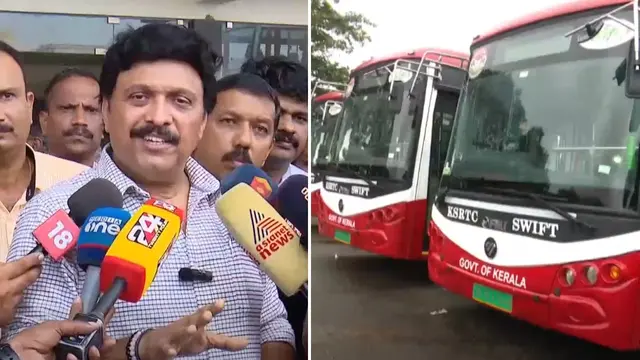
Kerala’s transport minister, K. B. Ganesh Kumar, has moved to defuse a local dispute over a fleet of electric buses supplied under the Smart City programme to Thiruvananthapuram. His response to a demand by the city’s mayor that the buses be returned to the municipal corporation sets out operational and contractual details while offering a practical alternative to keep services running.
Thiruvananthapuram electric buses plan
Ganesh Kumar said the Smart City contract explicitly allows the Kerala State Road Transport Corporation (KSRTC) to run the electric buses during peak hours in the city and then use them to ferry passengers from outlying areas into the urban centre. He urged the mayor to review the contract and, if the corporation still wishes to have the buses returned, to submit a formal letter requesting their handover.
“If the corporation formally asks for the buses back, KSRTC can deliver 113 buses to the location specified by the council,” the minister told reporters. He added that the buses are KSRTC assets in terms of drivers, conductors, ticketing machines and workshop facilities, which would remain under the state operator’s responsibility even if the vehicles were based at municipal depots.

As a conciliatory measure, the minister offered that should the corporation insist on taking back the 113 electric buses, KSRTC would redeploy 150 diesel mini-buses to service rural routes and maintain connectivity for residents who travel into Thiruvananthapuram from nearby towns such as Nedumangad, Pothencode and Attingal.
Ganesh Kumar also pointed out the financial and technical realities of the electric fleet. The Smart City project has a central allocation of ₹500 crore and an equal state contribution of ₹500 crore, with Thiruvananthapuram municipal allocation amounting to ₹135.7 crore. He noted that roughly 60 per cent of the overall scheme is borne by the state government, underlining KSRTC’s role in maintenance and operating responsibility.
Operational costs for the electric buses are significantly different from diesel models, the minister said. While tyre life on a standard super-fast diesel bus can reach up to 60,000 kilometres, these electric buses are estimated to last around 30,000 kilometres before tyre replacement. Crucially, the battery life is limited: replacements are likely in the fifth year and could cost approximately ₹28 lakh per vehicle. By contrast, the minister observed that the price of a similarly sized diesel mini-bus would be comparable to the battery replacement cost alone.
Revenue comparisons also featured in the minister’s remarks. He estimated that a diesel mini-bus generates an average of about ₹52 per kilometre, while average earnings from an electric bus acquired for about ₹1 crore work out to roughly ₹42 per kilometre. Those figures, he said, must be taken into account when weighing the wider economic implications of urban electrification and service planning.
Ganesh Kumar assured citizens that existing services funded by the Kerala Infrastructure Investment Fund Board (KIFB) — some 50 electric buses purchased for inland routes — would continue to operate. He stressed that KSRTC would not create disruption for commuters in Thiruvananthapuram and argued that obstructing a functioning public-transport scheme would not be in the public interest.
The minister framed the issue as one of responsible administration: balancing contractual obligations, technical constraints and the needs of both city and rural passengers. His proposals aim to keep services running while offering a pragmatic redistribution of resources should the municipal corporation pursue the return of the fleet.
Key Takeaways:
- Kerala transport minister says KSRTC will honour Smart City contract obligations and can return 113 buses if the mayor formally requests them.
- Minister offers to deploy 150 KSRTC buses to serve rural routes if corporation returns the 113 electric buses.
- State bears the majority of Smart City funding; KSRTC is responsible for maintenance and higher operating costs of electric buses, including battery replacement costs of around ₹28 lakh per bus in year five.
- Government insists services to bring residents from neighbouring towns into the city will continue and existing KIFB-funded electric bus services will remain in operation.








